

The Master of Science in Public Health program is designed to provide students with a rigorous and in-depth understanding of advanced theories, concepts, and methodologies in the field of Public Health. The program will equip students with the analytical skills and research expertise necessary to critically examine and address complex global and regional challenges, bridging theoretical frameworks with practical applications. The program spans four semesters, combining core courses with a selection of advanced electives that facilitate specialization in various subfields of Public Health. Students will engage in independent research, culminating in a thesis, which enables them to contribute original insights to the academic and policy discourse. The research component is supported by advanced training in research methods, enabling students to design and conduct robust studies using both qualitative and quantitative approaches. Throughout the program, students will enhance their ability to critically evaluate scholarly literature, apply theoretical frame works to real-world scenarios, and produce research-driven solutions to global issues. They will also develop strong communication skills, enabling them to effectively present and disseminate their findings to diverse audiences. The ultimate goal of the program is to prepare graduates for impactful careers in the fields requiring expertise in Public Health including but not limited to health care organizations, academia, think tanks, policy-making institutions, and international organizations.
Scope of the Degree Program:
The MSPH (Master of Science in Public Health) degree in Pakistan holds significant scope across market, social and employability dimensions. From a market perspective, the demand for public health professionals is growing due to rising health challenges, increased government and NGO involvement in disease prevention and the expansion of healthcare systems. Graduates are valued in health departments, NGOs, international organizations (like WHO and UNICEF), research institutes and the private healthcare sector, where they contribute to program planning, policy development and health data analysis. Socially, the MSPH plays a critical role in improving community health outcomes through evidence-based interventions in areas like maternal and child health, nutrition, sanitation, health education and epidemic control, making it a socially impactful field. In terms of employability, the degree opens diverse career pathways for both medical and non-medical professionals, enabling them to work as public health officers, epidemiologists, health managers, educators, and researchers. With the growing focus on preventive care, global health threats, and sustainable health systems, MSPH graduates are increasingly sought after, both locally and internationally.
Objectives of the Degree Program:
The graduates of the MSPH program are prepared to:
1. Solve health-related problems within the financial, socio-cultural, environmental, and political framework of Pakistan and its surrounding region.
2. Design, conduct, analyze and interpret the results of relevant studies, projects, and programs.
3. Plan, manage, monitor, and evaluate interventions in the field of public health.
4. Communicate public health messages to diverse audience effectively.
5. Advocate sound public health policies and practices.
The Master of Science in Public Health program at RLKU will provide experienced professionals with a thorough grounding in population-based approaches to health sector problem identification, investigation, and analysis and response management
Dean Message:
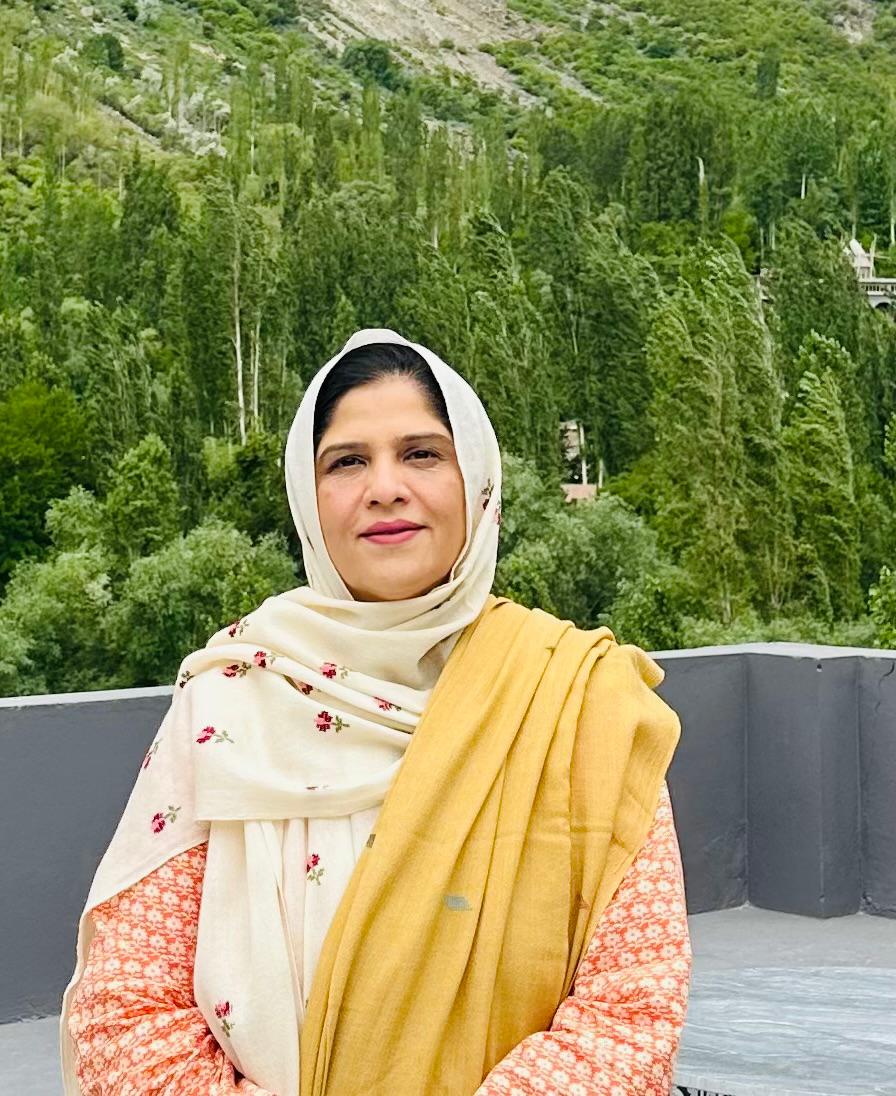
It is my privilege to welcome you to the Faculty of Public Health at RLKU. Our faculty is committed to excellence in teaching, research, and service, with the aim of preparing competent professionals and advancing knowledge in public health.
We provide a supportive academic environment where students are guided to develop skills in research, critical thinking, and evidence-based practice, while faculty members actively contribute to innovation, community engagement, and policy development. Together, we strive to address pressing health challenges and promote healthier communities at local, national, and global levels.
Prof. Dr. Tazeem Shahbaz
Dean & Head, Faculty of Public Health
RLKU
Admission Criteria:
a) An undergraduate degree (involving16 years of education) in, Bachelor of Science in Public Health (BSPS)/ MBBS/BDS/ MD/BSN/DVM/DPT/Pharm-D/BS Human Nutrition & Dietetics, MSc Epidemiology and BS equivalent qualification in any Allied Health related disciplines
b) Is the basic eligibility requirement for admission in the Master of Science in Public Health.
c) The candidate with16-year qualification in any discipline other than mentioned at (a)above may also be enrolled in MSPH program provided that they possess a minimum 2 years of professional experience in public health areas. Such candidates shall be required to complete total 54-60 credit hours including 24 credit hours deficiency courses for the award of MSPH degree.
d) The university, in addition to the basic eligibility will conduct a rigorous admission test as an eligibility condition for admission to the program, with a passing score of 50% (OR) will accept the GRE/HAT General with a passing score of 50%.
b) Is the basic eligibility requirement for admission in the Master of Science in Public Health.
c) The candidate with16-year qualification in any discipline other than mentioned at (a)above may also be enrolled in MSPH program provided that they possess a minimum 2 years of professional experience in public health areas. Such candidates shall be required to complete total 54-60 credit hours including 24 credit hours deficiency courses for the award of MSPH degree.
d) The university, in addition to the basic eligibility will conduct a rigorous admission test as an eligibility condition for admission to the program, with a passing score of 50% (OR) will accept the GRE/HAT General with a passing score of 50%.
Road Map Master of Science in Public Health
Road Map FOR HEALTH PROFESSIONALS
| Course Title | Credit Hours |
|---|---|
| Social and Behavioral Aspects of Public Health | 3 |
| Basic Epidemiology and Biostatistics | 3 |
| Health System | 3 |
| Course Title | Credit Hours |
|---|---|
| Research Methodology | 3 |
| Applied Epidemiology and Biostatistics | 3 |
| Environmental and Occupational Health | 3 |
| Communicable and Non-communicable Diseases | 3 |
| Course Title | Credit Hours |
|---|---|
| Health Promotion, Advocacy and Social Mobilization | 3 |
| Health Policy, Planning and Management | 3 |
| Emergency and Disaster Preparedness | 3 |
| Thesis/ Dissertation/ Research Project |
| Course Title | Credit Hours |
|---|---|
| Thesis/Dissertation/Research Project***(Continued) | 6 |
| Practicum OR One Publication in Peer Reviewed Journal (HEC Indexed Journal) |
Road Map FOR NON-HEALTH PROFESSIONALS
| Course Title | Credit Hours |
|---|---|
| Social and Behavioral Aspects of Public Health | 3 |
| Basic Epidemiology and Biostatistics | 3 |
| Health System | 3 | Demography and Population Dynamics | 3 |
| Hospital Administration | 3 |
| Scientific Writing | 3 |
| Course Title | Credit Hours |
|---|---|
| Research Methodology | 3 |
| Applied Epidemiology and Biostatistics | 3 |
| Environmental and Occupational Health | 3 | Communicable and Non-communicable Diseases | 3 |
| Artificial Intelligence in Public Health | 3 |
| Climate Change and Health | 3 |
| Course Title | Credit Hours |
|---|---|
| Health Promotion, Advocacy and Social Mobilization | 3 |
| Nutrition for Children, Adolescent & Mothers | 3 |
| Community Management of Malnutrition | 3 | Health Policy, Planning and Management | 3 |
| Global Health | 3 |
| Emergency and Disaster Preparedness | 3 |
| Thesis/Dissertation/ Research Project | 3 |
| Course Title | Credit Hours |
|---|---|
| Thesis/Dissertation/Research Project***(Continued) | 6 |
| Practicum OROne Publication in Peer Reviewed journal (HEC Indexed Journal) |
| Course Title | Credit Hours |
|---|---|
| Applied Health Economics | AHE-E701 |
| Health Care Financing | HCF-E702 |
| Supply Chain Management | SCM-E703 |
| Demography and Population Dynamics | DPD-E704 |
| Community Based RH Interventions | CRHI-E705 |
| Gender Development | GD-E706 |
| Nutrition for Children, Adolescent & Mothers | NCAM-E707 |
| Community Management of Malnutrition | CMM-E708 |
| Human Resource Management for Health | HRMH-E709 |
| Health Policy, Planning and Management | HPPM-E710 |
| Financial Management | FM-E711 |
| Hospital Administration | HA-E712 |
| Scientific Writing | SW-E713 |
| HArtificial Intelligence in Public Health | AIPH-E714 |
| Climate Change and Health | CCH-E715 |
| Global Health | GH-E716 |
| Emergency and Disaster Preparedness | EDP-E717 |
Disclaimer: Anything present on website can be changed without any prior Notice.