

The Department of Religious Studies at Rashid Latif Khan University, Lahore, is a vibrant academic platform dedicated to the rigorous and meaningful study of religions, with a special emphasis on Islamic intellectual traditions. The department seeks to cultivate a deep understanding of religion as a dynamic force shaping human thought, culture, and society. Grounded in classical Islamic scholarship and enriched by contemporary academic methodologies, the department offers an intellectually stimulating environment where students and researchers critically engage with the Qur’ān, Hadith, Islamic jurisprudence, theology, and the study of world religions. It promotes interdisciplinary inquiry, encouraging scholars to explore the relationship between religion and modern global challenges such as ethics, social justice, governance, technology, and interfaith relations. With the launch of M.Phil and PhD programs, the department aspires to develop highly qualified scholars, researchers, and thought leaders who are capable of contributing to academia, policy-making, and societal development. The department remains committed to academic excellence, intellectual integrity, and the promotion of a balanced, moderate, and research-driven understanding of Islam in the contemporary world.
Vision of the Department
To become a globally recognized center of excellence in Religious Studies that advances the scholarly understanding of Islam through critical engagement with contemporary realities, producing visionary scholars, ethical leaders, and impactful researchers who contribute to the intellectual, moral, and social development of humanity.
Mission of the Department
The Department of Religious Studies is committed to:
Promoting excellence in teaching, research, and academic scholarship in Islamic and Religious Studies.
Integrating classical Islamic knowledge with contemporary academic disciplines to address modern challenges.
Developing critical thinking, research skills, and intellectual independence among students.
Cultivating ethical values, social responsibility, and leadership qualities rooted in Islamic teachings.
Encouraging interfaith dialogue, tolerance, and harmony among diverse religious and cultural communities.
Preparing scholars who can contribute effectively to academia, policy-making, media, and community development at national and international levels.
Reviving the true spirit of Islamic scholarship based on authenticity, balance, and relevance to contemporary issues.
HOD Message:
It is a matter of great pride and gratitude that the Department of Religious Studies at Rashid Latif Khan University is launching its M.Phil and PhD programs, marking a significant milestone in our academic journey.
In an era characterized by rapid intellectual, social, and technological transformations, the need for sound, balanced, and research-based understanding of religion has become more critical than ever. Our aim is to produce scholars who are not only deeply rooted in the classical Islamic tradition but are also capable of addressing contemporary challenges with wisdom, insight, and academic rigor.
At our department, we are committed to fostering an environment of intellectual curiosity, critical inquiry, and ethical scholarship. We strive to equip our students with advanced research skills and a comprehensive understanding of Islamic sciences, enabling them to contribute meaningfully to academia, society, and global discourse.
We believe that true knowledge leads to the development of character, promotes tolerance, and builds bridges between communities. Therefore, our programs emphasize not only academic excellence but also the cultivation of values such as integrity, respect, and social responsibility.
I warmly invite aspiring scholars and researchers to join us in this noble pursuit of knowledge and to become part of a dynamic academic community dedicated to excellence, innovation, and service to humanity.
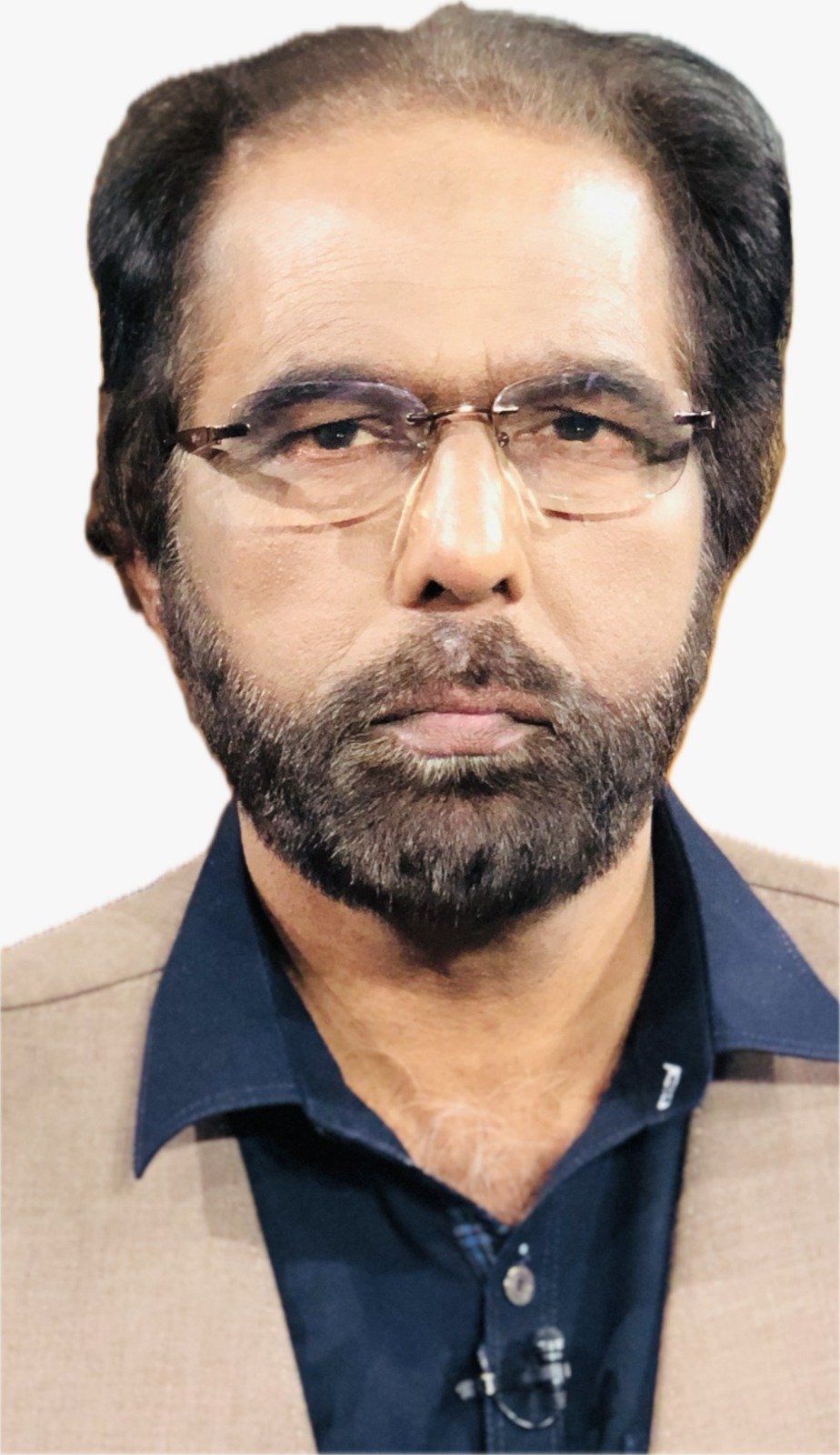
Prof. Dr. Muhammad Tahir Mustafa
HOD, Department of Religious StudiesRashid Latif Khan University, Lahore
Degree Programs (Department of Religious Studies )
1. M.Phil in Religious Studies
Rashid Latif Khan University stands as one of Pakistan’s premier institutions for higher education and research, dedicated to fostering a vibrant, student-centered learning environment. Here, students and scholars are encouraged to explore the complexities of modern development with curiosity and critical thinking. Through a wide range of rigorous academic programs, RLKU empowers learners to challenge conventional ideas, think innovatively, and find solutions to real- world problems. By promoting global perspectives, the university prepares its graduates to contribute meaningfully to building a fairer and more equitable society. RLKU’s modern campus provides the perfect setting for advanced study and research, supported by leadership committed to the university’s mission, vision, and values. The MPhil program in Religious Studies at RLKU is designed to deepen scholarly engagement with the rich Islamic intellectual tradition while addressing the contemporary challenges facing the Muslim Ummah. The program highlights the relevance of religious thought to modern issues, engaging with subjects such as social justice, ethical challenges, interfaith relations, and global conflicts, and encouraging students to critically examine both traditional and contemporary Islamic perspectives. By placing Islamic knowledge in conversation with today’s global challenges, the MPhil program aims to cultivate scholars who are well-versed in classical Islamic studies and equipped to contribute to contemporary intellectual debates and policymaking. Graduates leave the program prepared either to pursue further academic research or to apply their knowledge in diverse professional settings, addressing the pressing needs of the Muslim Ummah in an increasingly complex and interconnected world.
Career Prospects
Graduates of the MPhil in Religious Studies program possess a broad and interdisciplinary skill set that opens up diverse career opportunities across various sectors. The program’s focus on critical inquiry into religious thought, jurisprudence, history, and contemporary issues equips individuals with the expertise required to excel in both academic and professional settings. Below are some potential career paths:
1. Academia and Research:
University Lecturer or Professor: Graduates may pursue careers in teaching and research, specializing in Religious Studies or related fields such as Islamic jurisprudence, theology, or comparative religion.
Researcher or Scholar: Opportunities exist for specialized research in Islamic law, history, culture, or modern Muslim societies. Graduates can contribute to academic scholarship or engage in think tanks and research institutes.
Curriculum Developer: Graduates can design and develop educational curricula for Islamic schools, universities, or Islamic study programs worldwide.
2. Religious Leadership and Services:
Advisor on Islamic Affairs: Graduates can serve as consultants or advisors on Islamic law and culture for government agencies, international organizations, or multinational corporations.
Diplomat or Cultural Attaché: Graduates may work in diplomatic or cultural roles in countries where Islamic heritage and culture play a central role, promoting cultural exchange and fostering international relations.
Legal Consultant: Expertise in Islamic law allows graduates to work as legal consultants specializing in Shariah law for courts, private law firms, or advisory boards.
3. Islamic Banking and Finance:
Shariah-Compliant Banking Expert: Graduates can provide specialized advice on Shariah-compliant financial practices and products within the rapidly growing Islamic banking sector.
Financial Advisor: As consultants, they may guide Islamic financial institutions in developing compliant financial services and investments.
Islamic Finance Auditor: Graduates can work as auditors to ensure financial institutions adhere to Islamic legal and ethical standards.
4. NGOs and International Organizations:
Program Officer or Consultant: Graduates may join NGOs focused on humanitarian aid, social justice, and interfaith dialogue, working in roles that address challenges faced by Muslim communities globally.
Researcher or Policy Advisor: Opportunities exist with international organizations, where graduates can influence policy and decision-making on issues concerning the Islamic world.
5. Media and Communication:
Journalist or Writer: Graduates can specialize in writing or reporting on Islamic culture, history, and contemporary issues, contributing to print, broadcast, or digital media platforms.
Content Creator: Opportunities are available to create educational and informative content on Islamic studies for digital platforms, including blogs, podcasts, and social media.
6. Publishing and Translation:
Translator: Graduates with language skills can work in translating classical and modern Islamic texts into various languages, enhancing cross-cultural understanding and knowledge dissemination.
Editor or Author: Graduates can pursue careers in publishing Islamic educational materials, research journals, or books on Islamic studies for academic or public audiences.
7. Cultural and Heritage Preservation:
Expert in Islamic Art and History: Graduates may work in museums, cultural institutions, or heritage organizations, preserving and promoting Islamic art, architecture, and history.
Consultant in Cultural Preservation: Graduates can serve as consultants for the preservation and restoration of Islamic heritage sites and cultural projects in the Muslim world.
With the growing demand for expertise in Islamic education, legal consultation, finance, and cultural exchange, graduates of the MPhil in Religious Studies are well-positioned to contribute meaningfully to both local and international initiatives. Their knowledge and skills are invaluable in addressing the evolving challenges faced by Muslim communities globally, making them sought-after professionals across diverse industries and sectors.
Program Objectives
The M.Phil program in Religious Studies at Rashid Latif Khan University (RLKU) is structured to achieve the following key objectives:
1. Knowledge Integration:
To provide students with a deep understanding of core principles in Religious Studies, blending theoretical knowledge with practical applications to address real- world issues.
2. Research Excellence:
To foster a strong research culture, encouraging students to undertake innovative projects that advance Islamic knowledge and address contemporary challenges faced by the Muslim world.
3. Leadership Development:
To equip students with leadership skills, preparing them to excel in their professional fields and contribute positively to society.
4. Ethical and Social Responsibility:
To instill a strong sense of ethics and social responsibility, ensuring graduates advocate for equity, justice, and the well-being of their communities.
5. Critical Thinking and Problem-Solving:
To enhance students' critical thinking abilities, enabling them to tackle complex problems with creativity and sound judgment.
6. Global and Cultural Awareness:
To prepare students for effective engagement in a globalized world by fostering understanding of diverse cultures and global challenges, promoting inclusivity and respect.
7. Lifelong Learning:
To cultivate a commitment to lifelong learning, ensuring graduates remain adaptable and continue professional growth in response to evolving needs.
These objectives collectively prepare graduates to be thought leaders, researchers, and professionals who can apply Islamic knowledge to address contemporary societal challenges.
3. Leadership Development:
To equip students with leadership skills, preparing them to excel in their professional fields and contribute positively to society.
4. Ethical and Social Responsibility:
To instill a strong sense of ethics and social responsibility, ensuring graduates advocate for equity, justice, and the well-being of their communities.
5. Critical Thinking and Problem-Solving:
To enhance students' critical thinking abilities, enabling them to tackle complex problems with creativity and sound judgment.
6. Global and Cultural Awareness:
To prepare students for effective engagement in a globalized world by fostering understanding of diverse cultures and global challenges, promoting inclusivity and respect.
7. Lifelong Learning:
To cultivate a commitment to lifelong learning, ensuring graduates remain adaptable and continue professional growth in response to evolving needs.
These objectives collectively prepare graduates to be thought leaders, researchers, and professionals who can apply Islamic knowledge to address contemporary societal challenges.
5. Critical Thinking and Problem-Solving:
To enhance students' critical thinking abilities, enabling them to tackle complex problems with creativity and sound judgment.
6. Global and Cultural Awareness:
To prepare students for effective engagement in a globalized world by fostering understanding of diverse cultures and global challenges, promoting inclusivity and respect.
7. Lifelong Learning:
To cultivate a commitment to lifelong learning, ensuring graduates remain adaptable and continue professional growth in response to evolving needs.
These objectives collectively prepare graduates to be thought leaders, researchers, and professionals who can apply Islamic knowledge to address contemporary societal challenges.
7. Lifelong Learning:
To cultivate a commitment to lifelong learning, ensuring graduates remain adaptable and continue professional growth in response to evolving needs.
These objectives collectively prepare graduates to be thought leaders, researchers, and professionals who can apply Islamic knowledge to address contemporary societal challenges.
Admission Criteria:
1. Academic Qualifications: Applicants must have a minimum CGPA of 2.0 out of 4.0 in BS semester system or at least a second division in the annual system for an MA or sixteen years studies in any discipline for admission to the M.Phil. program.
2. Entry Test: Applicants are required to take a subject-based entry test and meet the qualifying criteria to be considered for admission.
Road Map MPhil program in Religious Studies
| Course Title | Credit Hours |
|---|---|
| Quranic Sciences (Uloom al-Quran) | 3 |
| Study of World Religions | 3 |
| Ḥadīth Sciences (Uloom al-Ḥadīth) | 3 |
| Study of Shari‘ah, Fiqh, and Islamic Finance | 3 |
| Fahm ul Quran I | 1 |
| Course Title | Credit Hours |
|---|---|
| Research Methodology | 3 |
| Study of Selected Arabic and English Sources | 3 |
| Seerah Studies | 3 |
| Islam & Orientalism | 3 |
| Fahm ul Quran II | 1 |
| Course Title | Credit Hours |
|---|---|
| Thesis | 6 |
Disclaimer: Anything present on website can be changed without any prior Notice.
2. Ph.D. Religious Studies
The Ph.D. Program in Religious Studies provides a scholarly pursuit devoted to the investigation of Islam's multifaceted aspects. This degree offers a strong foundation for critical analysis and advanced study in the fields of Islamic history, religion, and current affairs. Our program encourages students to delve deeply into the rich tapestry of Islamic thought and practice, with an emphasis on promoting interdisciplinary discourse and intellectual curiosity. In order to enable researchers to contribute significantly to the global conversation on religion and society, we seek to develop a nuanced understanding of Islam's past, present, and future via rigorous investigation and intellectual engagement.
Program Objectives of Ph.D. Religious Studies
1. Provide in depth knowledge of basic Islamic Sciences such as al-Qur’ān, Hadith, Seerah (life of the Prophet Muhammad pbuh) al-Fiqh (Muslim Jurisprudence), Islāmic History, Islāmic Thought, Islāmic Culture and Civilization, contemporary Issues and Research Methodology in Religious Studies.
2. Provide basic skills of social sciences that are required by a graduate (as per HEC guidelines).
3. Create better understanding of Islām and contemporary challenges faced by the Muslim
Ummah.
4. To create a broad academic platform to coordinate and support research on the identities of the main religions of the world, their differences and their common grounds, and how they contribute to a better understanding of past and present-day culture and ethics.
5. Identify and document common humanitarian values propagated by various religions.
6. Enable the students of Religious Studies capable of understanding and solving current
contemporary issues in the light of Islāmic teaching.
7. Prepare scholars who can participate in advance research activities.
Career Prospects of Ph.D. Religious Studies
The Ph.D. degree in Religious Studies, particularly with specialization in Islamic Studies, has strong and evolving market demand in both Pakistan and globally. This demand stems from geopolitical shifts, rapid digitalization, the need for evidence-based policy responses, and the growing role of religion in addressing contemporary global challenges such as climate change, artificial intelligence ethics, migration, and social cohesion.
Global Interest and Contemporary Relevance Rising cultural exchanges, geopolitical developments, expanding Muslim diasporas, and increasing interactions between the Muslim world and the West have heightened worldwide interest in Islam. In the digital age, this interest extends to online narratives, social media discourse, and algorithmic amplification of religious content. Rigorous academic research in Islamic Studies is essential to provide nuanced, contextualized insights that counter misinformation, promote informed dialogue, and support evidence-based understanding of Islamic thought, history, and contemporary issues.
Demand for Highly Skilled Researchers, Scholars, and Experts There is a growing need for Ph.D.-level experts trained in critical analysis, textual studies, and modern research methodologies. Graduates are sought after in:
Academia and higher education (professorships, deanships) Research institutes and think tanks (local and international)
Government policy units and international organizations (UN, UNESCO, OIC, EU) Shariah advisory boards in Islamic finance and banking
Media, digital content creation, and strategic communication
NGOs working on interfaith harmony, counter-radicalization, and community development In Pakistan and abroad, demand remains strong for specialists who can address both traditional scholarship and emerging issues such as digital Islam, AI ethics from an Islamic perspective, and sustainable development aligned with maqasid al-shariah.
Interdisciplinary and Innovative Research Approaches
Modern Ph.D. programs in Religious/Islamic Studies adopt a robust interdisciplinary framework that integrates history, theology, philosophy, sociology, anthropology, cultural studies, political science, and increasingly digital humanities, quantitative methods, and data analytics. This allows scholars to examine Islam’s interaction with contemporary challenges, including:
Artificial Intelligence and technology ethics Climate change and environmental ethics Gender, human rights, and social justice
Blockchain, fintech, and Islamic economics Such an approach produces graduates equipped with both depth in classical sources and the ability to apply Islamic principles to 21st-century problems.
Promotion of Intercultural and Interfaith Dialogue in the Digital Era
The program emphasizes constructive engagement between Islam and other religious, cultural, and intellectual traditions. In today’s polarized digital landscape—where misinformation spreads rapidly and AI-generated content influences public opinion—this focus is more critical than ever. Graduates are trained to foster dialogue through traditional platforms as well as digital tools, contributing to peacebuilding, empathy, and the reduction of stereotypes and extremism in both offline and online spaces.
Ethical Scholarship, Global Citizenship, and Sustainable Development
The Ph.D. instills values of integrity, critical thinking, accountability, and responsible knowledge production. Graduates are prepared to engage ethically with diverse perspectives, contribute to evidence- based policymaking, and promote global citizenship. In line with Pakistan’s national priorities and the UN Sustainable Development Goals (SDGs), scholars can address pressing issues such as:
Islamic perspectives on environmental sustainability and climate justice Ethical governance of emerging technologies (AI, digital platforms)
Social cohesion in multicultural societies This prepares them to make meaningful contributions to nation-building, regional stability, and international cooperation.
Alignment with National and Global Policy Priorities (New Point)
Recent HEC curriculum revisions for Islamic Studies (2025) explicitly highlight the need to align programs with evolving labor market demands, national socio-economic development, and international benchmarks. There is clear policy emphasis on producing scholars who can support interfaith harmony, counter violent extremism, contribute to Islamic finance, and integrate Islamic teachings with modern scientific and technological advancements. Globally, institutions are investing in
research on “Digital Islam,” “Quantitative Islam,” and AI-mediated interfaith initiatives, creating new career pathways in academia, diplomacy, development organizations, and the tech sector.
Additional Modern-Day Career Pathways
Senior roles in Islamic fintech and ethical AI governance
Consultants for governments on religious literacy and counter-narratives
Digital humanities specialists (manuscript digitization, big-data analysis of Islamic texts) Experts in faith-based sustainable development and climate action
Policy advisors in international development and migration.
Admission Criteria:
Academic Qualifications
A candidate must hold an MS/MPhil or equivalent degree (Level 7 as per the National Qualifications Framework).
Provisional admission may be allowed for students still pursuing MS/MPhil, provided they complete the degree (with required CGPA) and clear the admission test within one year, and the admission committee is satisfied with their Statement of Purpose.
CGPA / Division Requirement
Minimum CGPA of 3.0 out of 4.0 (semester system) or 60% marks (annual system) in the MS/MPhil or equivalent degree.
This applies whether the degree is from a Pakistani or foreign university.
If the CGPA/percentage is below the minimum but the candidate shows strong potential, universities may allow a "zero semester" with 9–12 additional credit hours at Level 7, requiring a minimum 3.0 GPA in those courses.
Admission Test
All applicants must pass a university-conducted (or HEC-accredited body) test equivalent to GRE General / HAT General, with a minimum 60% passing score.
For intra-disciplinary admission (PhD in a different field from the MS/MPhil), a GRE Subject / equivalent test with at least 50% marks is required, plus 6–9 credit hours of deficiency courses.
Statement of Purpose
Applicants must submit a Statement of Purpose as an integral part of the application.
It should include:
Title of the potential research proposal.
Current understanding of the field and research ideas.
Intended impact of the research.
Demonstration of passion and enthusiasm for the area.
Road Map Phd program in Religious Studies
Total no of Credit Hours: 30| Course Title | Credit Hours |
|---|---|
| علوم القرآن و التفسیر Quran and Tafsir Sciences |
3 |
| مطالعات فقہ : معاصر اجتہادی مسائل Islamic Jurisprudence and Contemporary Ijtihadi |
3 |
| اسلام اور جدید سیاسی ، سماجی اور معاشی تحدیات
Islam and Modern Political, Social and Economic Challenges |
3 |
| Course Title | Credit Hours |
|---|---|
| علوم الحدیث
Hadith Sciences |
3 |
| تحقیق کے مناہج و اطلاقات
Methodologies and Applications of Research |
3 |
| مطالعہ ادیان کی عصری جہات
Contemporary Perspectives of Study of World Religions |
3 |
| Course Title | Credit Hours |
|---|---|
| Relevant Field | 12 |
Disclaimer: Anything present on website can be changed without any prior Notice.
Faculty List

